
Academic Project · Senior Thesis · 3D Platformer
Scout's Well
A mushroom-themed 3D platformer built as a senior thesis — a kid-friendly adventure game about curiosity, family, and the world hiding just beneath your feet.
01
The Story
Scout is a young mushroom who lives in a village with his grandpa and older brother Theo. He looks up to Theo — their relationship is playful and full of energy. During a game of hide and seek, Scout discovers that Theo has gone down the well at the edge of the village.
It's up to the player to follow him. What begins as a simple search becomes a journey into a hidden world beneath the village — filled with moving platforms, puzzles, and mazes. The underground is strange and wonderful, and Scout has to navigate all of it to bring his brother home.
02
The Challenge
Fernando and I had worked together before and knew our workflow clicked. For our thesis, we wanted to push ourselves — not just technically, but creatively. We challenged ourselves to build a complete, polished 3D platformer from scratch: kid-friendly in tone, mushroom-themed in world, and fully playable from start to finish.
We brought in classmates to help with character design concepts, and collaborated with Kyle Feehan — a composer from NYU — to create an original score that matched the game's whimsical underground world.
03
How We Split the Work
Fernando and I each owned distinct parts of the pipeline, letting us work in parallel without stepping on each other. Here's how it broke down:
Mary Crimmins
Character & Game Pipeline
- Character modeling in Maya
- Rigging & skinning
- Character animation
- Full game pipeline & interactivity in Unreal Engine
- World assembly & level design
Fernando Rojas
Art, Texture & Environment
- Concept art & 2D drawings
- Logo design
- Texturing in Substance Painter
- Environmental design & asset creation
- Lighting & final renders
Kyle Feehan
Music & Sound (NYU)
- Original score & composition
- Audio design for the underground world
Classmates
Character Design Sketches
- Dillon O'Keefe — Grandpa (Pops) original sketch
- Casey Rosales — Scout original sketch
04
Concept Art & Character Design
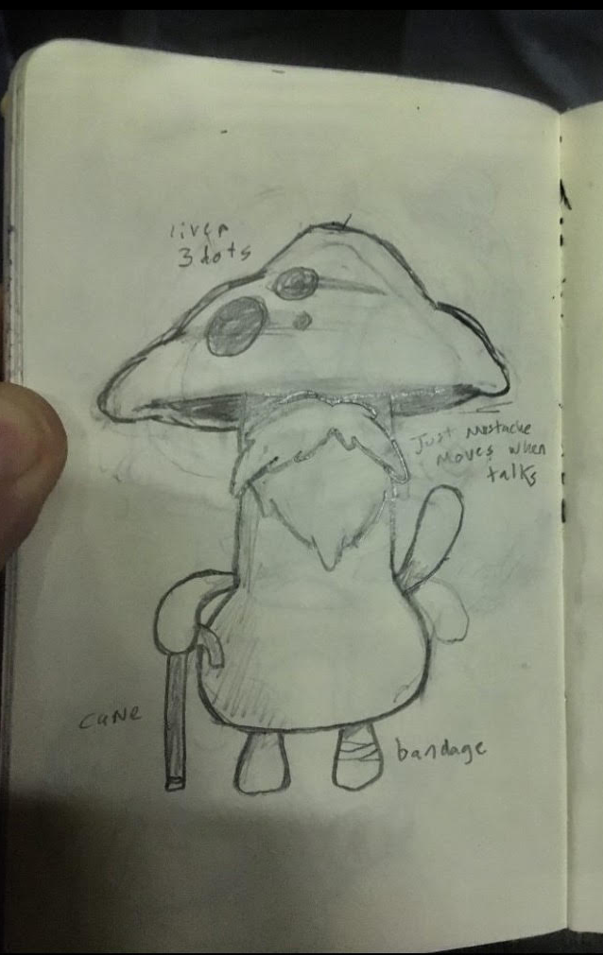
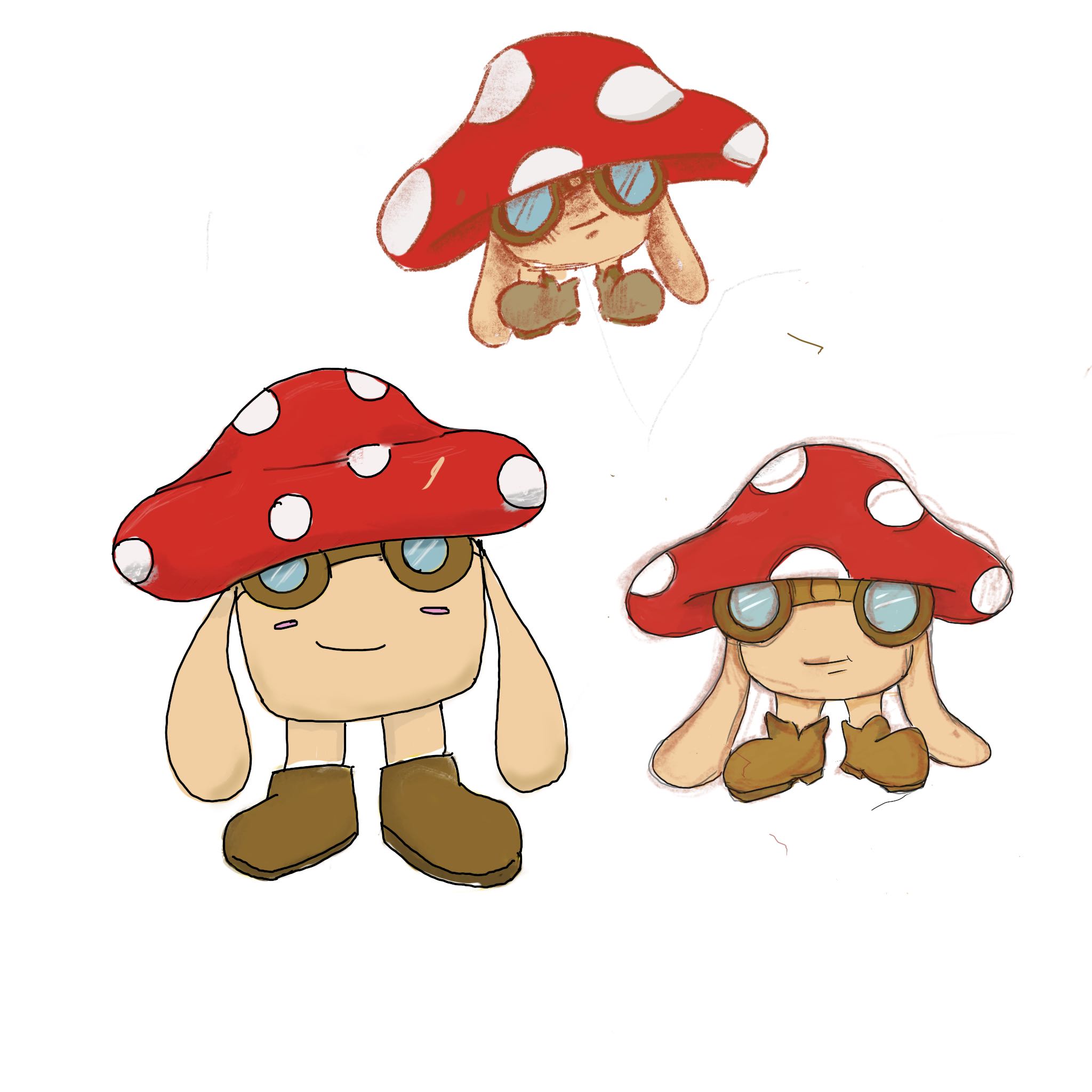
Character design started with pencil sketches from classmates. Dillon O'Keefe designed Pops — the grandpa — complete with design notes like "just mustache moves when talks," a cane, and a bandage. Casey Rosales developed Scout across several iterations, working out his proportions, signature goggles, and droopy ears.
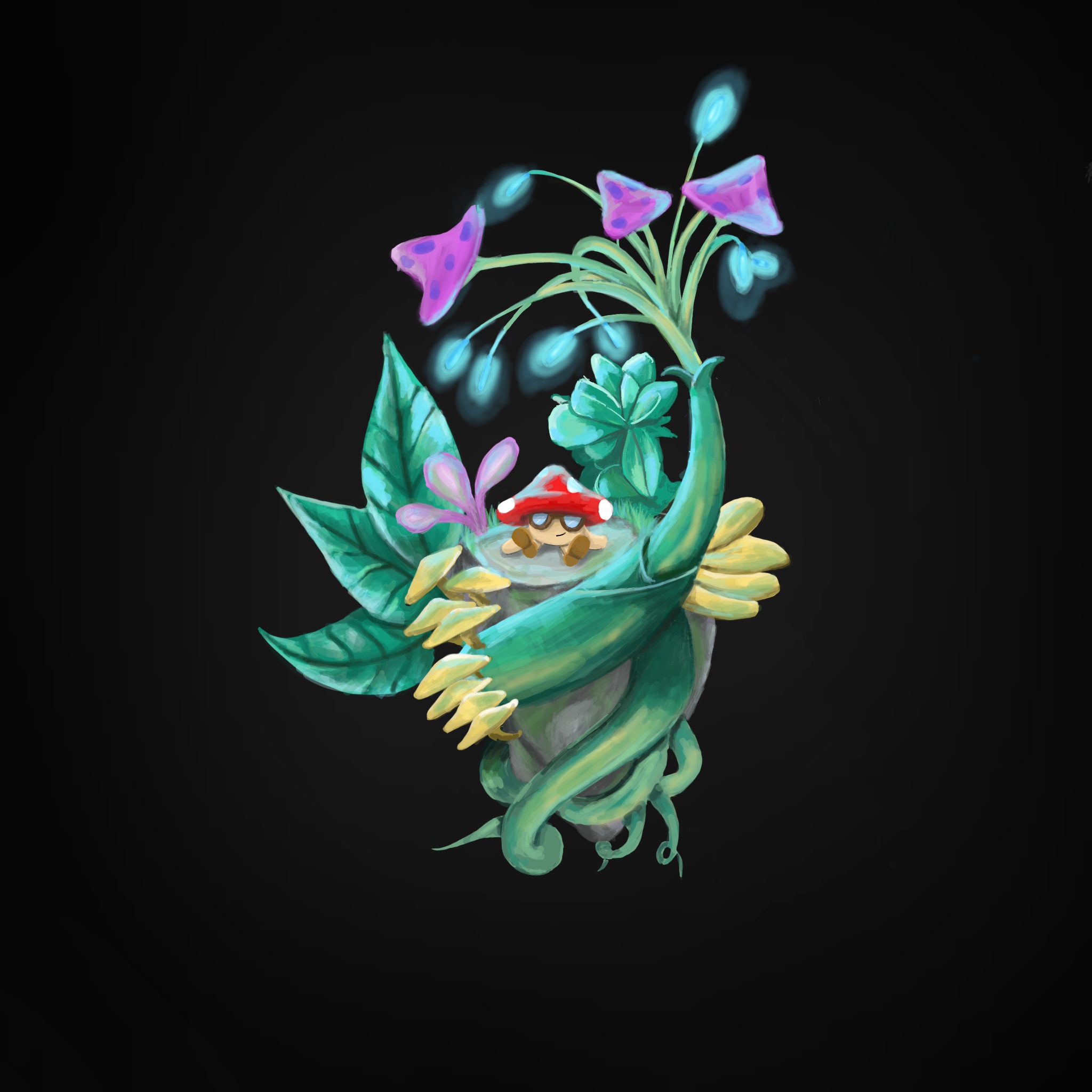
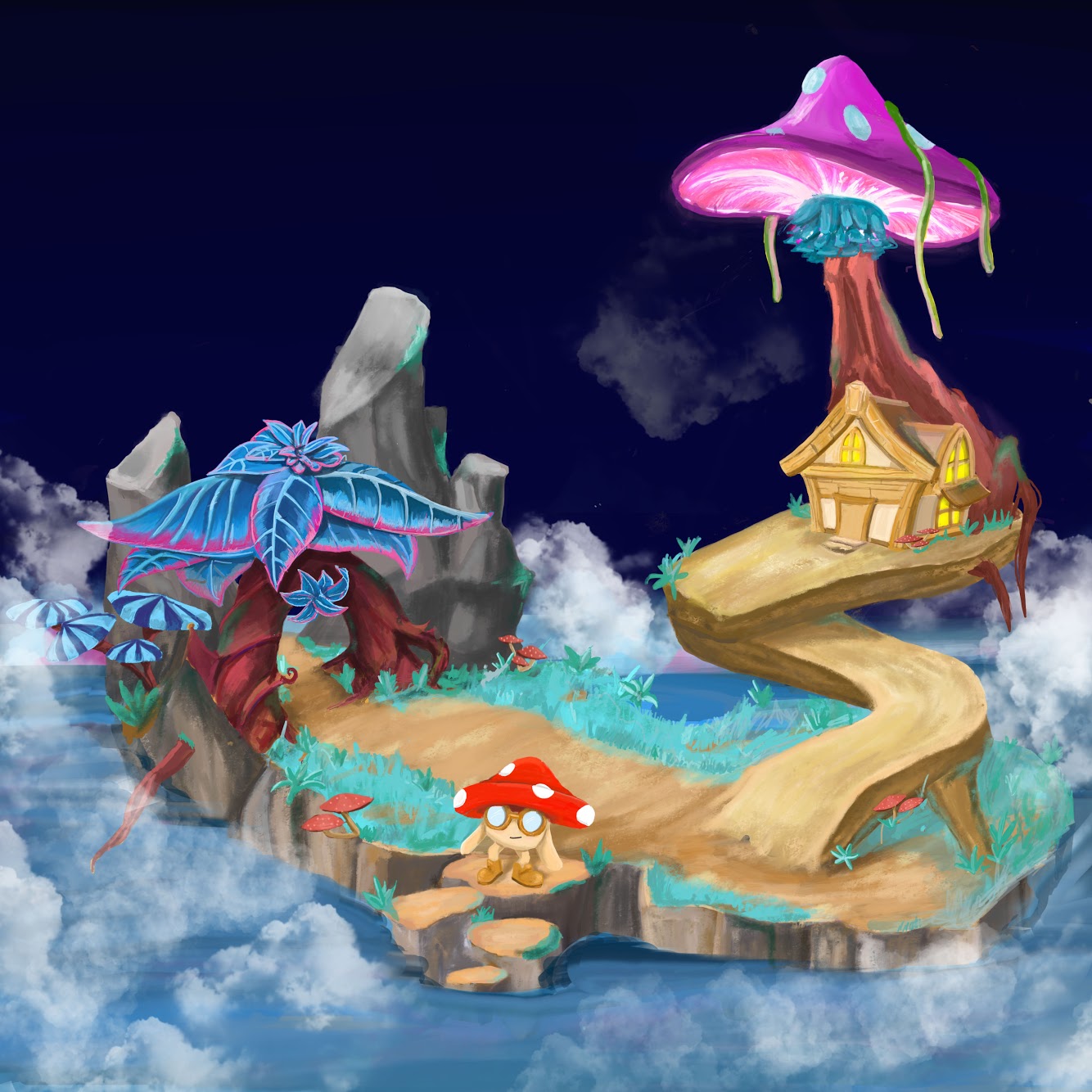
Fernando then took those sketches further — developing the world concept art, the game's key art, and the logo that set the visual tone for everything that followed.
05
Character Modeling
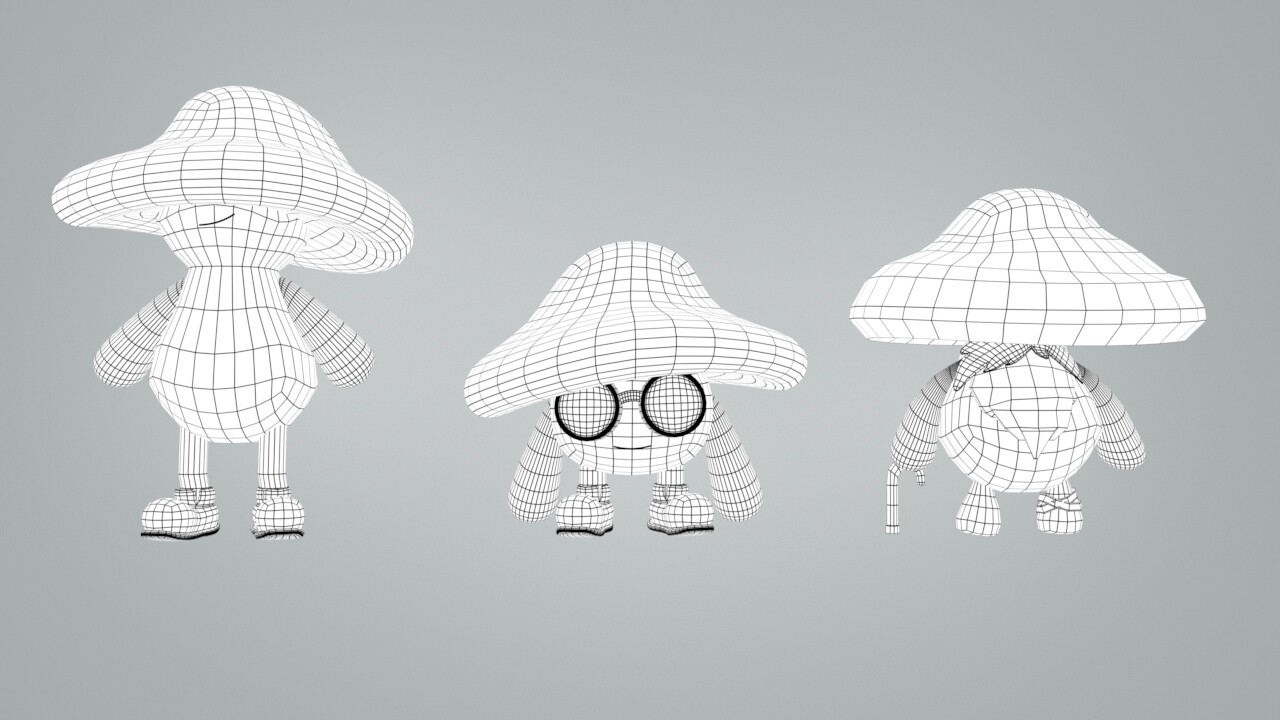
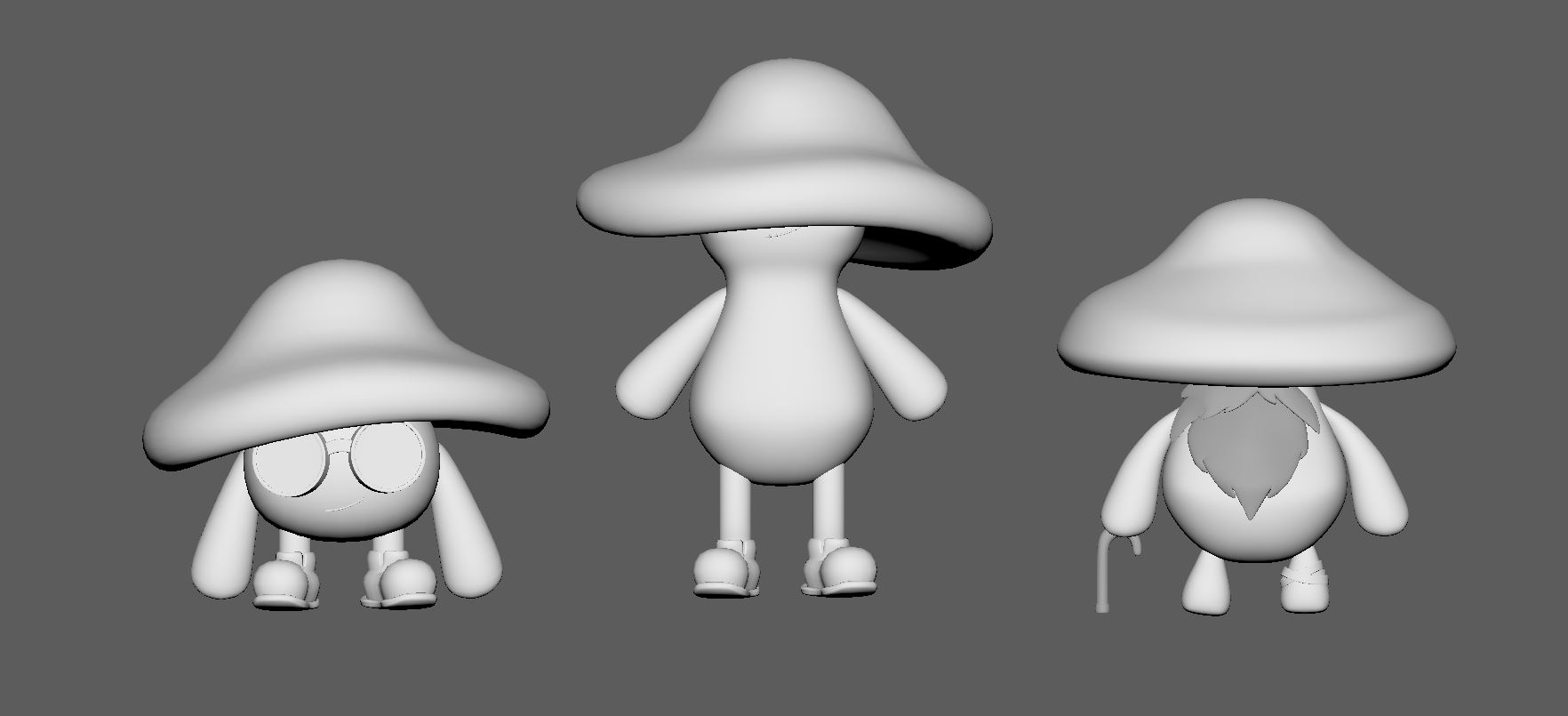
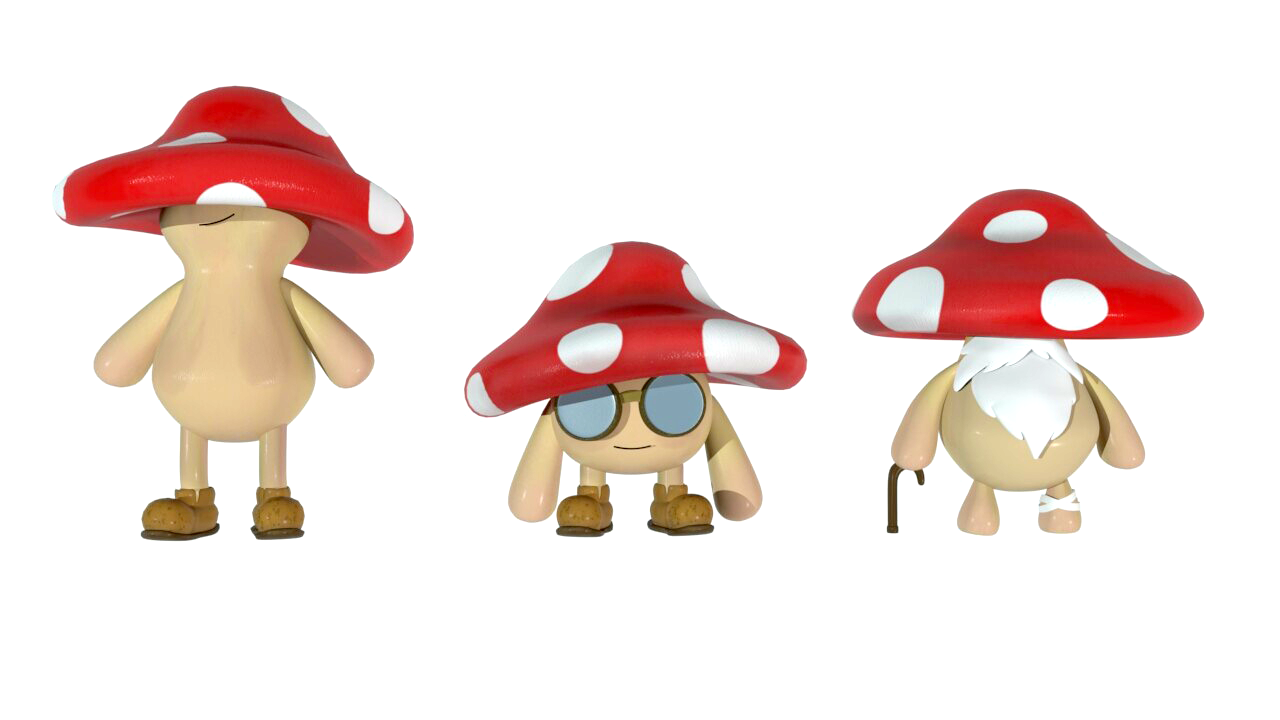
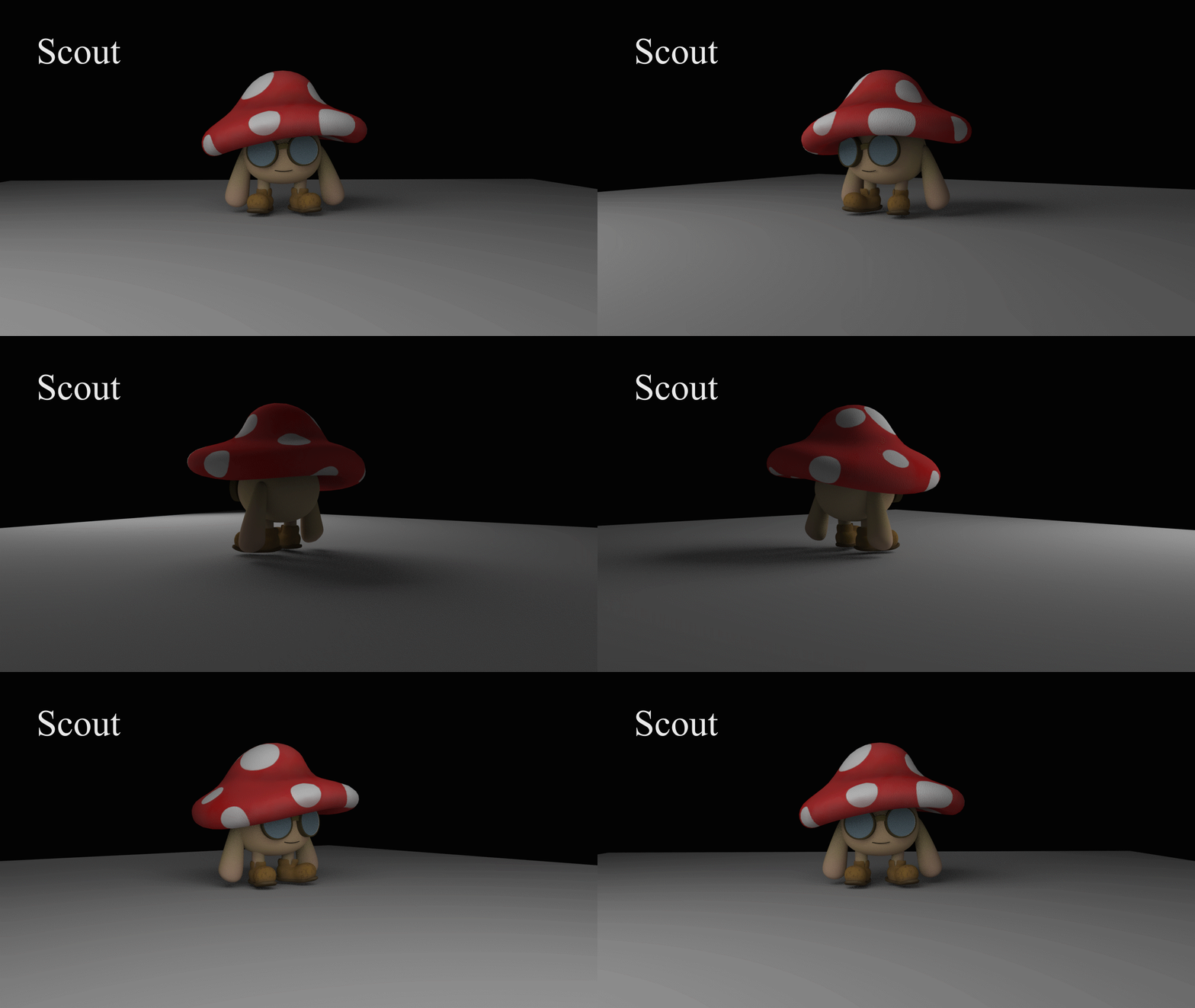
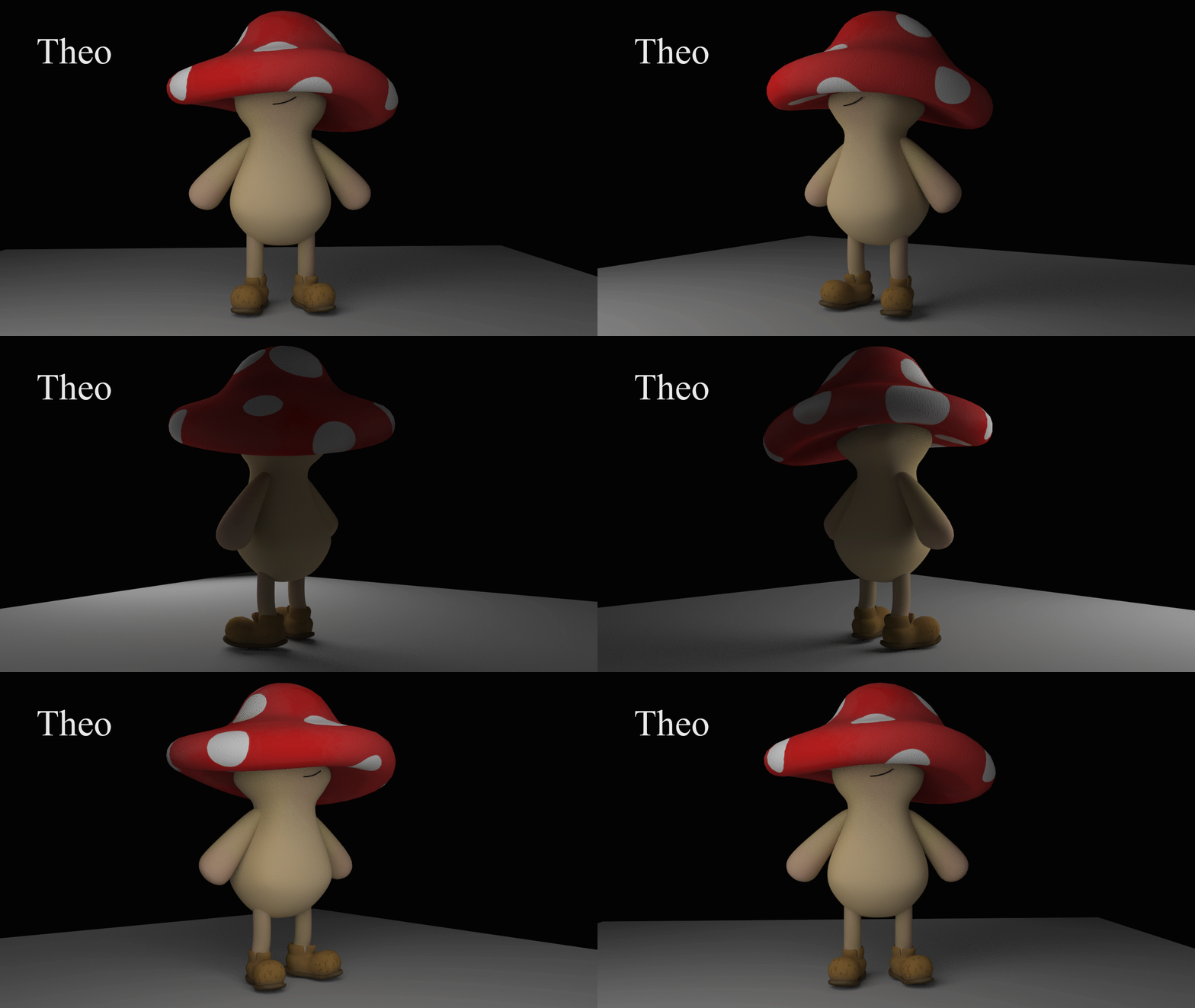
Using the concept sketches as reference, I modeled all three main characters in Maya — Scout, Theo, and Pops. I built each from scratch, shaping the soft rounded forms that give the mushroom family their kid-friendly appeal. The wireframe view shows the clean topology designed to deform naturally once rigged.
06
Rigging
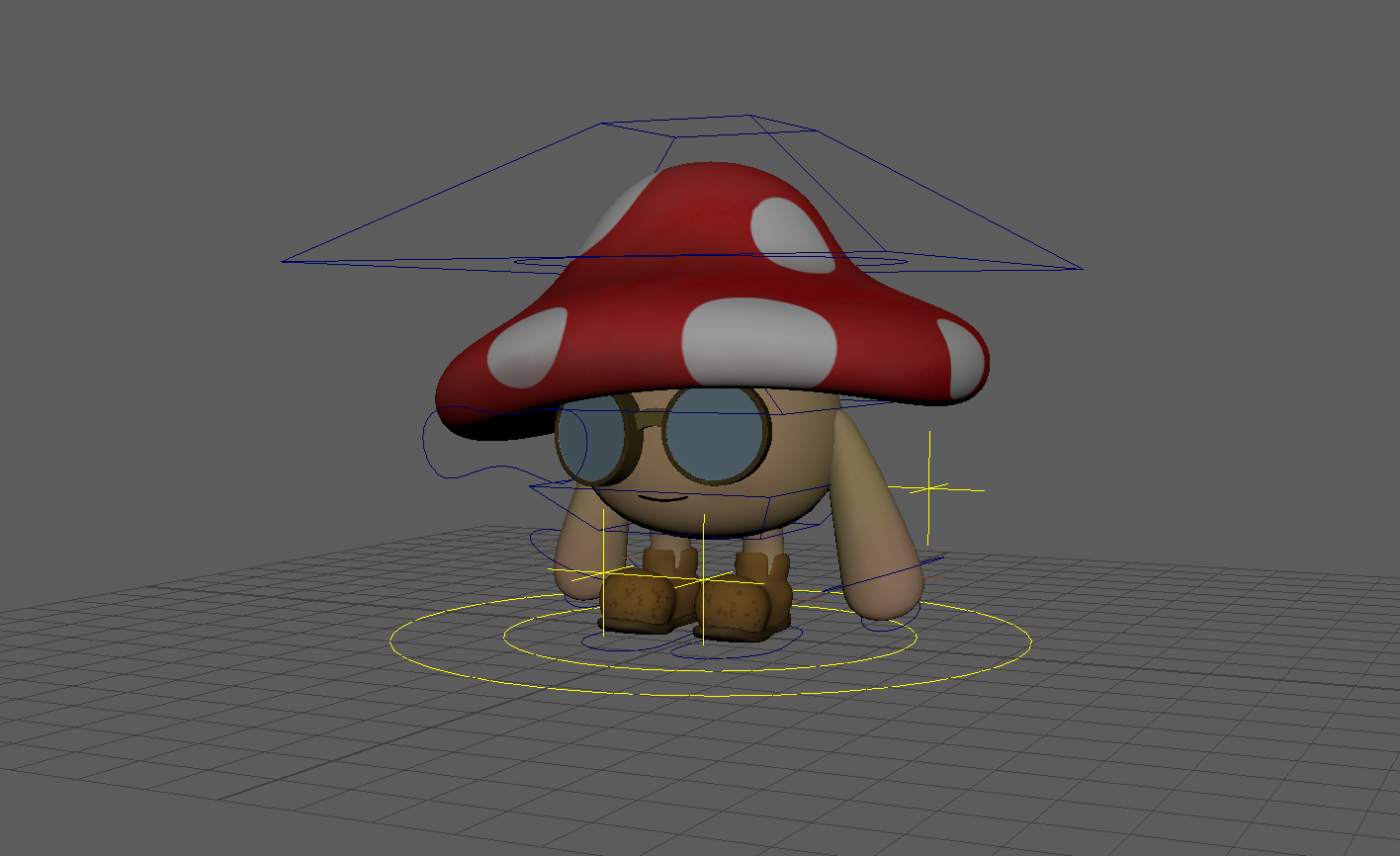
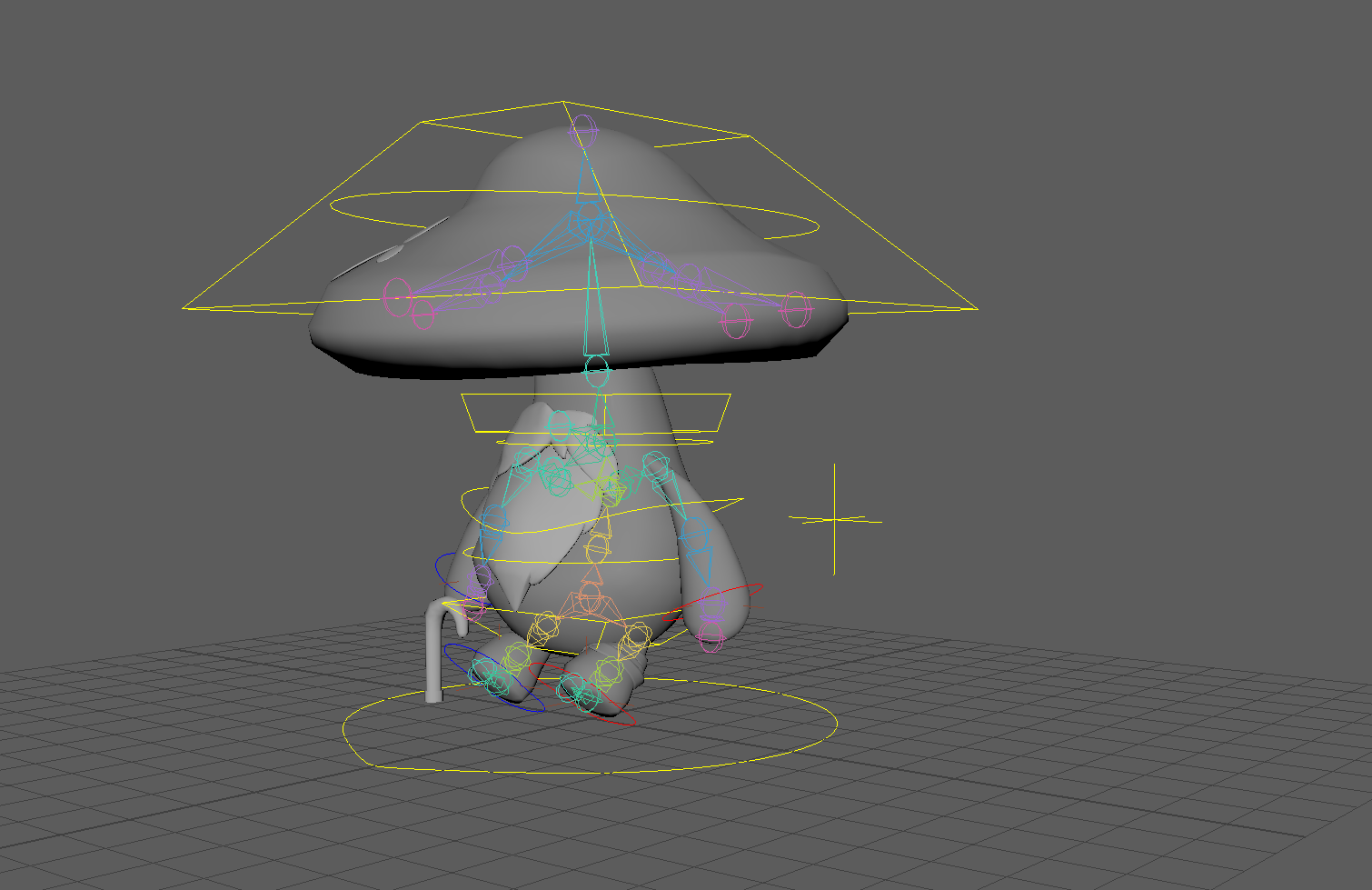
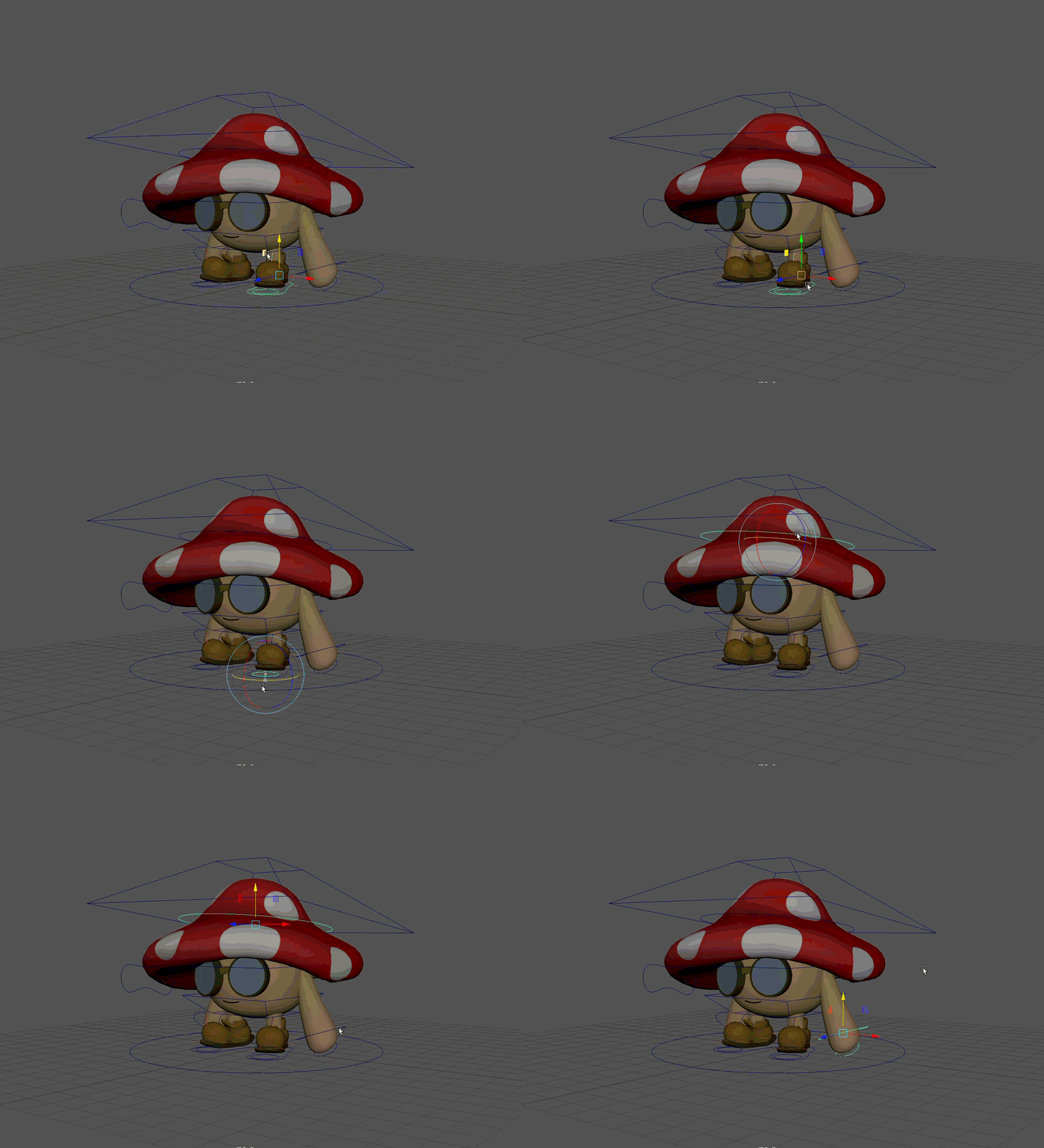
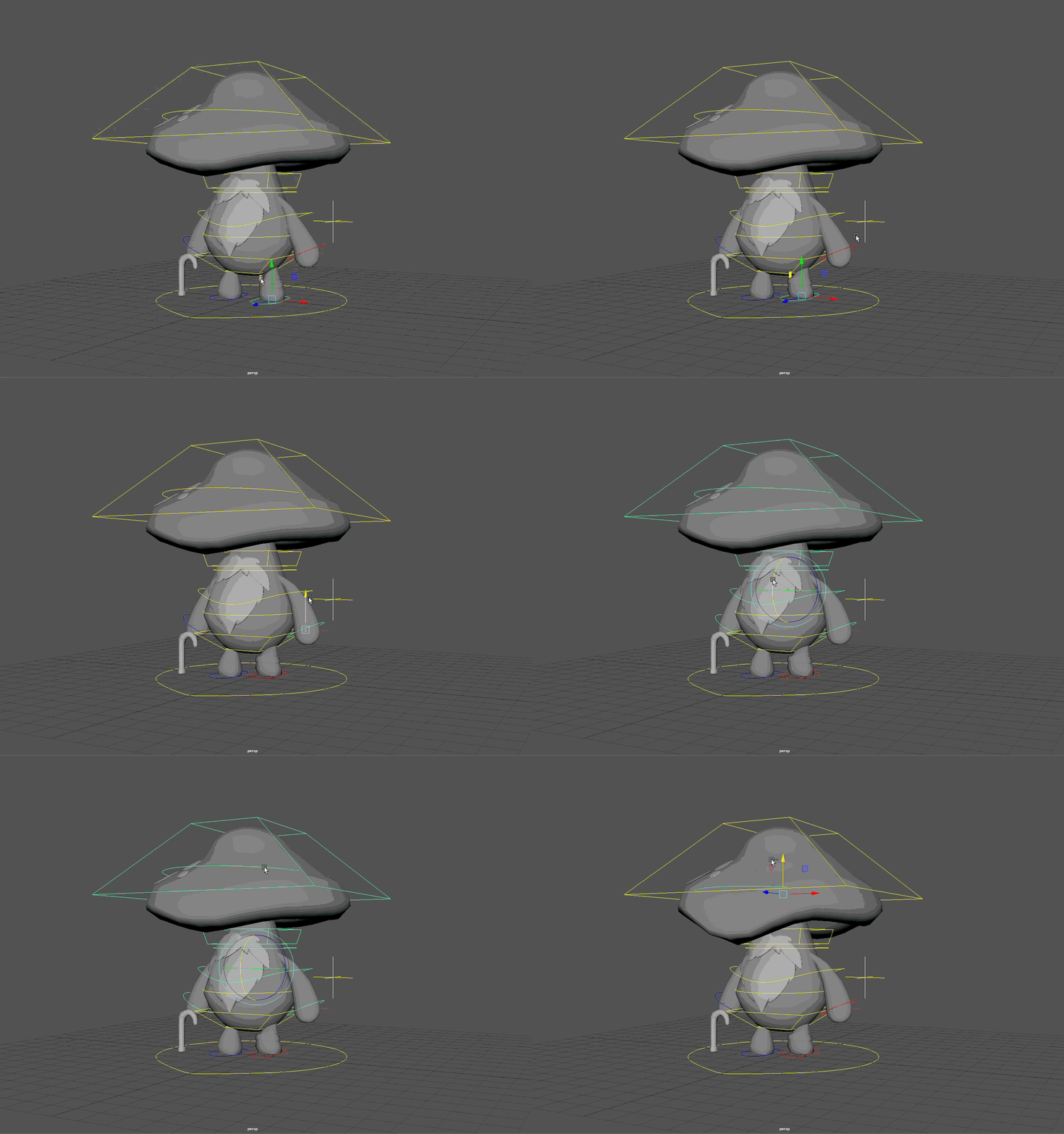
With the models complete I built rigs for each character — joint chains, controls, and skinning to make them move naturally. The soft blob-like forms required careful weight painting to keep the rubbery feel of the designs intact without pinching or collapsing.
07
Animation
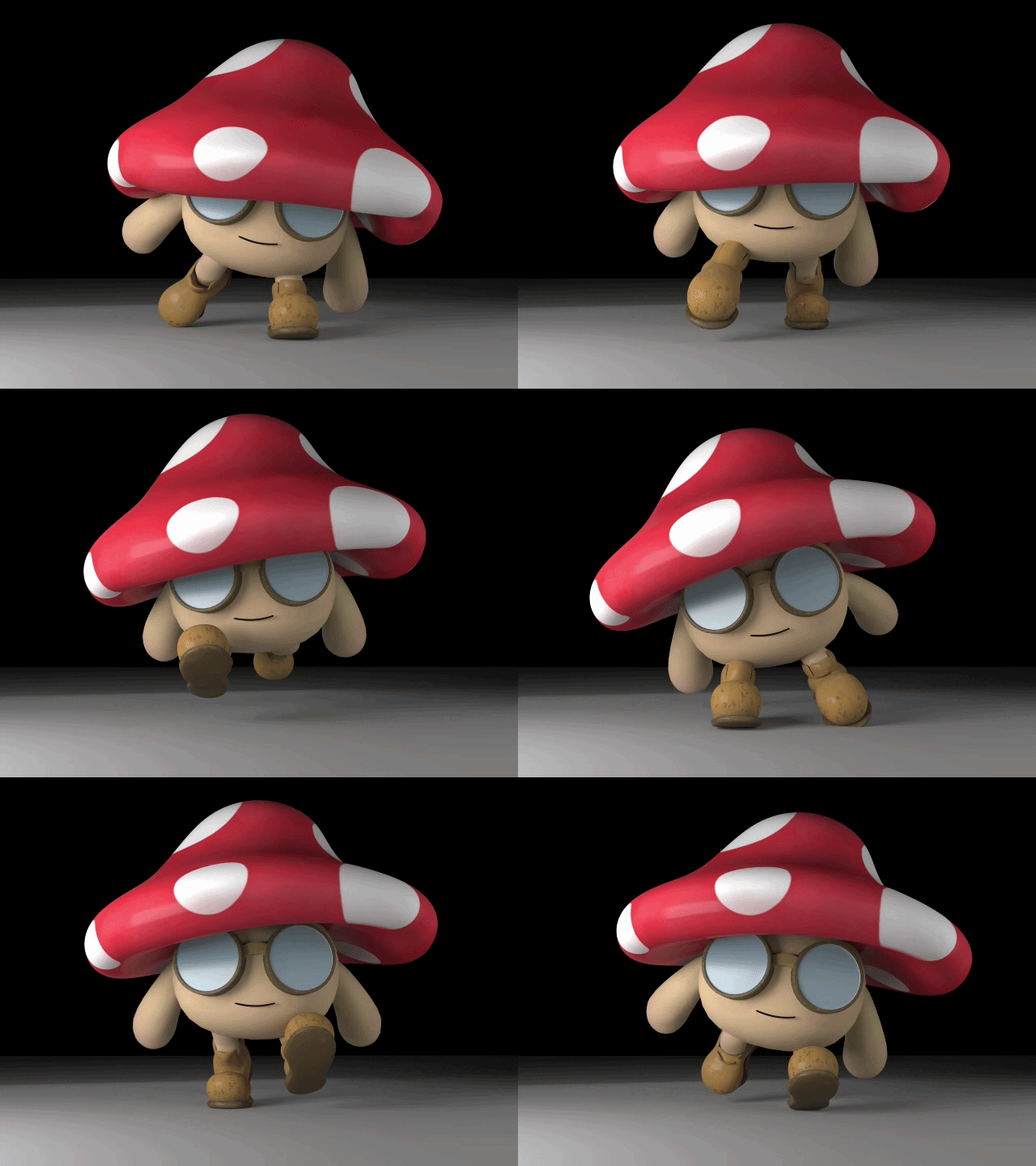
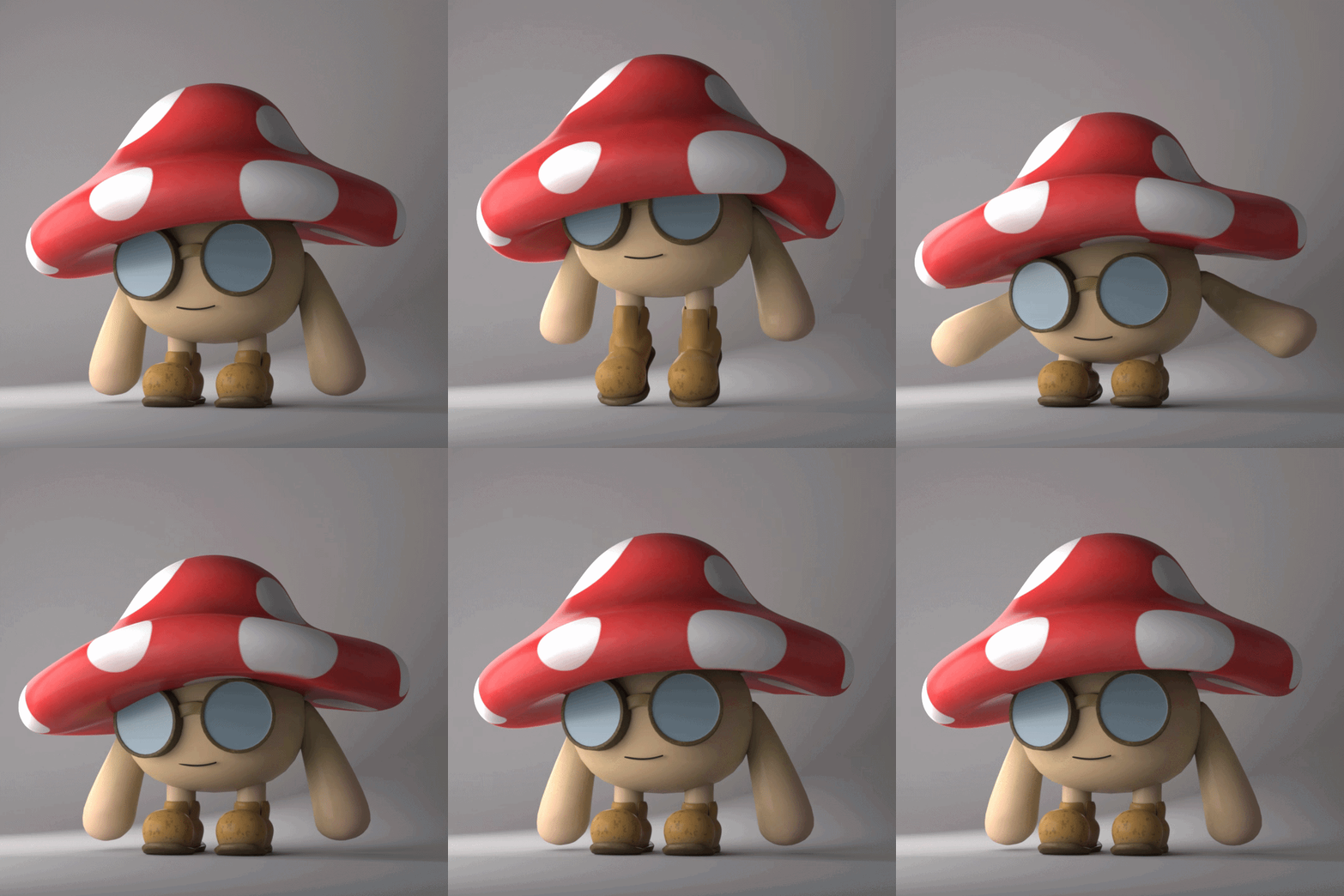
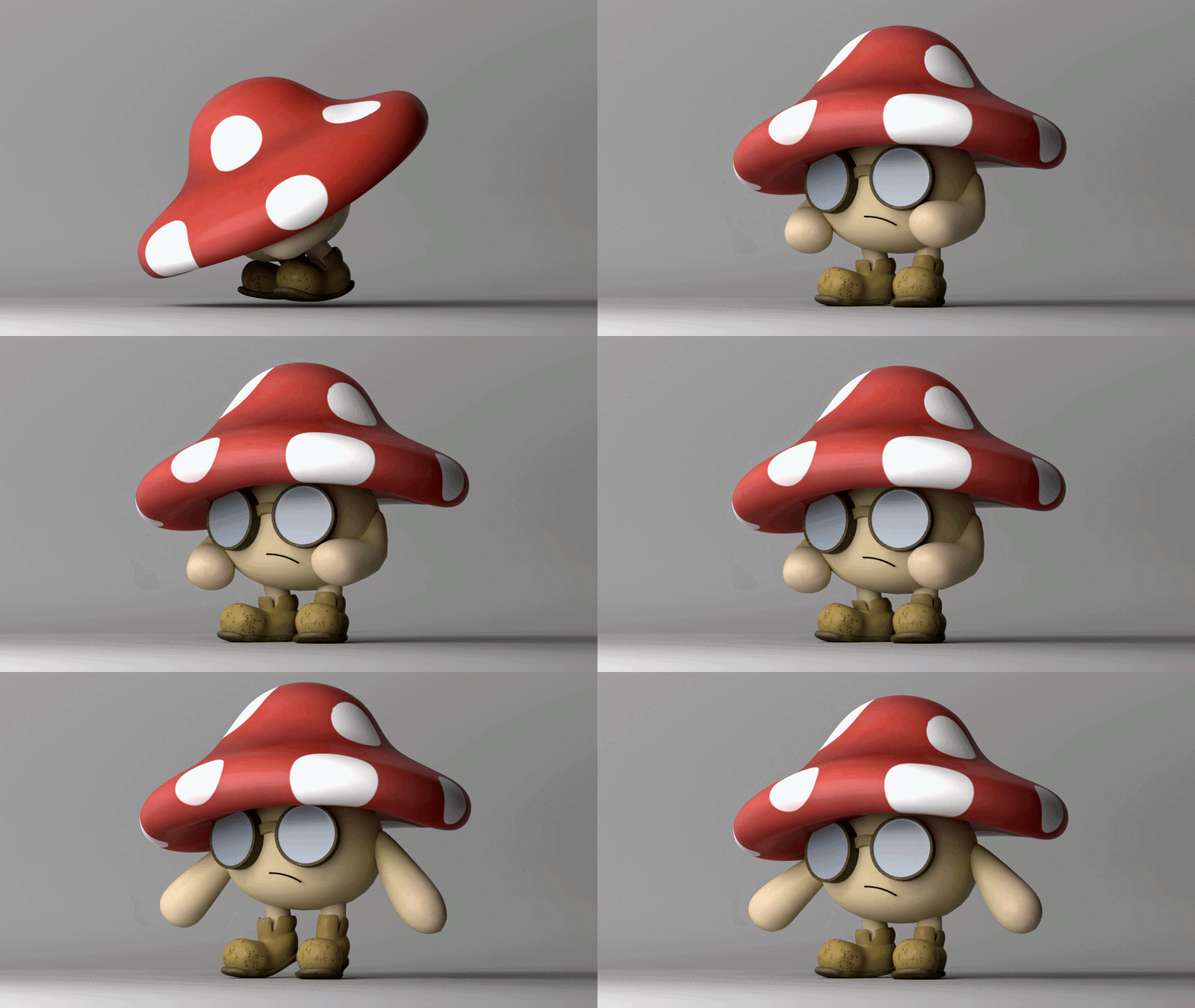
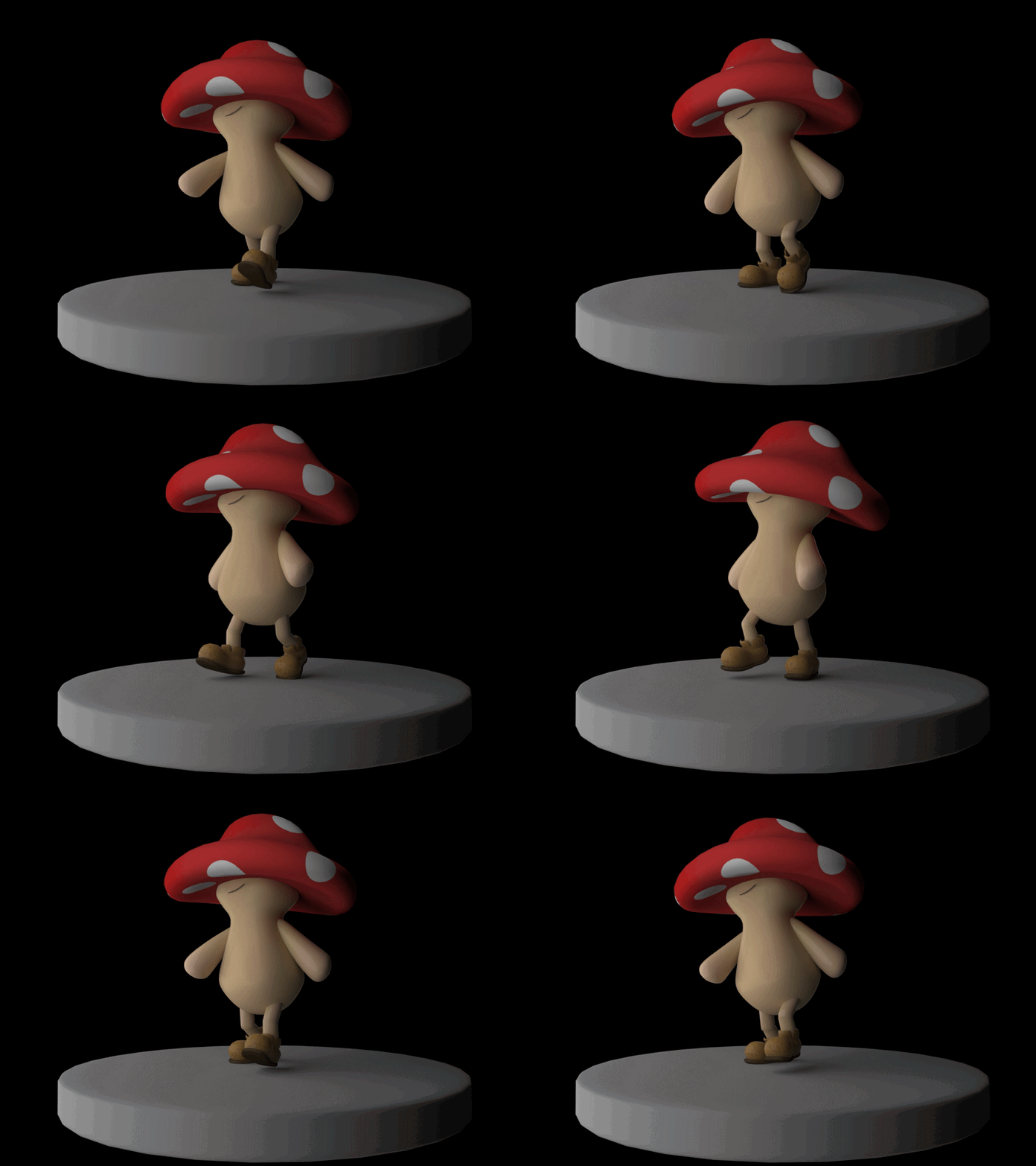
With the rigs complete I animated the full set of in-game states for each character: walk cycles, run cycles, idle poses, and reaction animations. Each had to read clearly at game scale and loop seamlessly inside Unreal Engine.
08
Game Pipeline & World Assembly
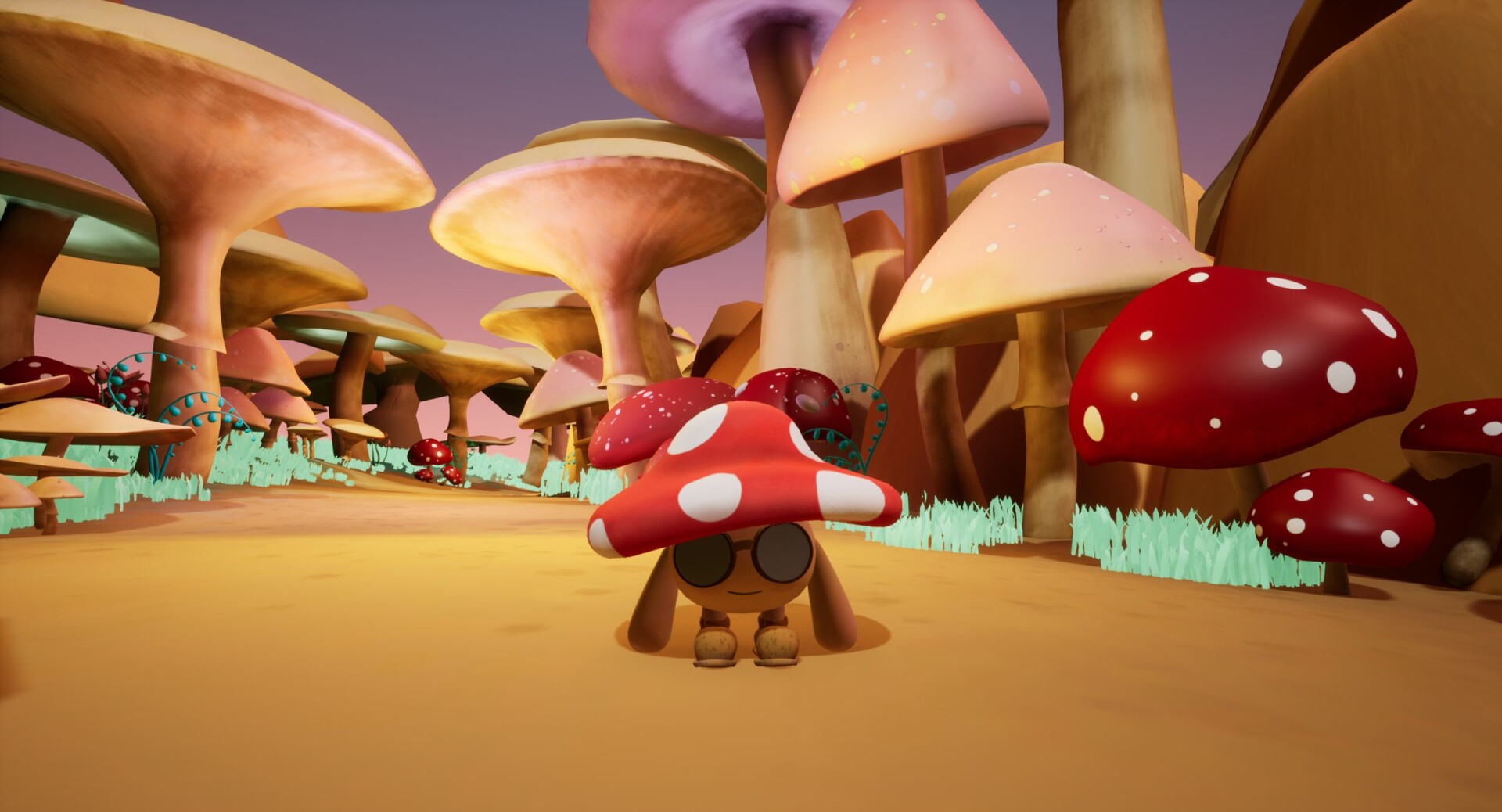
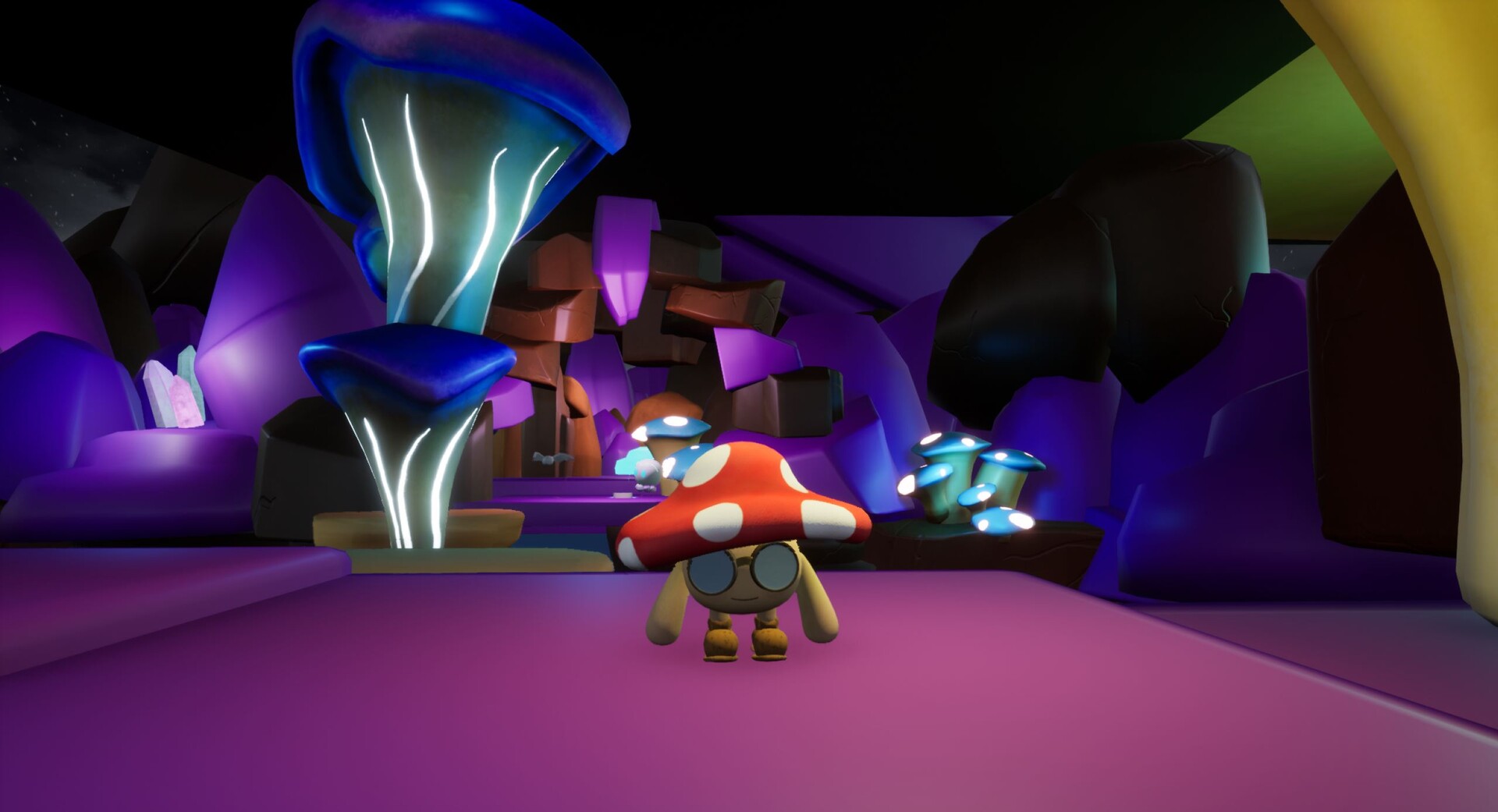
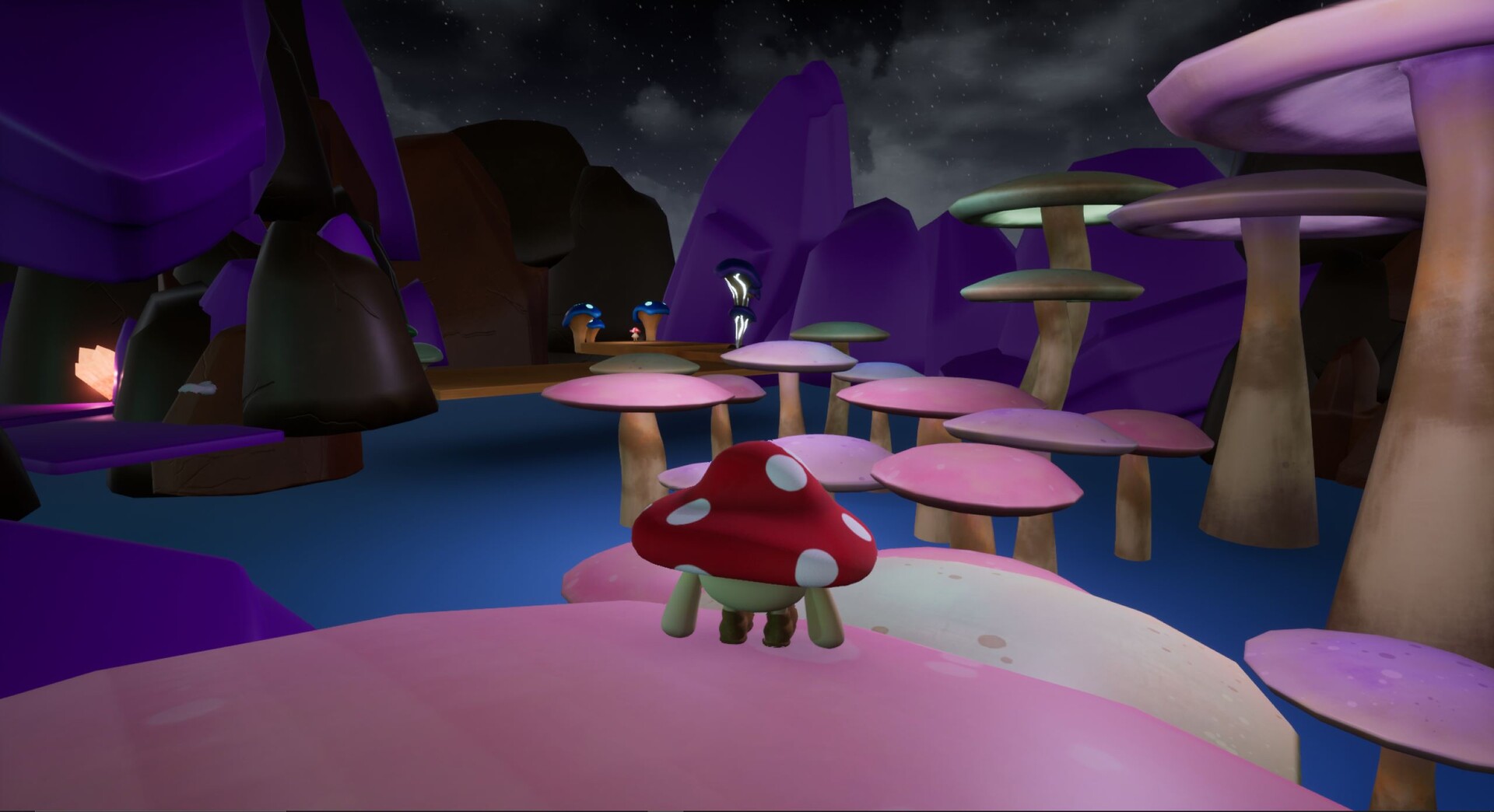
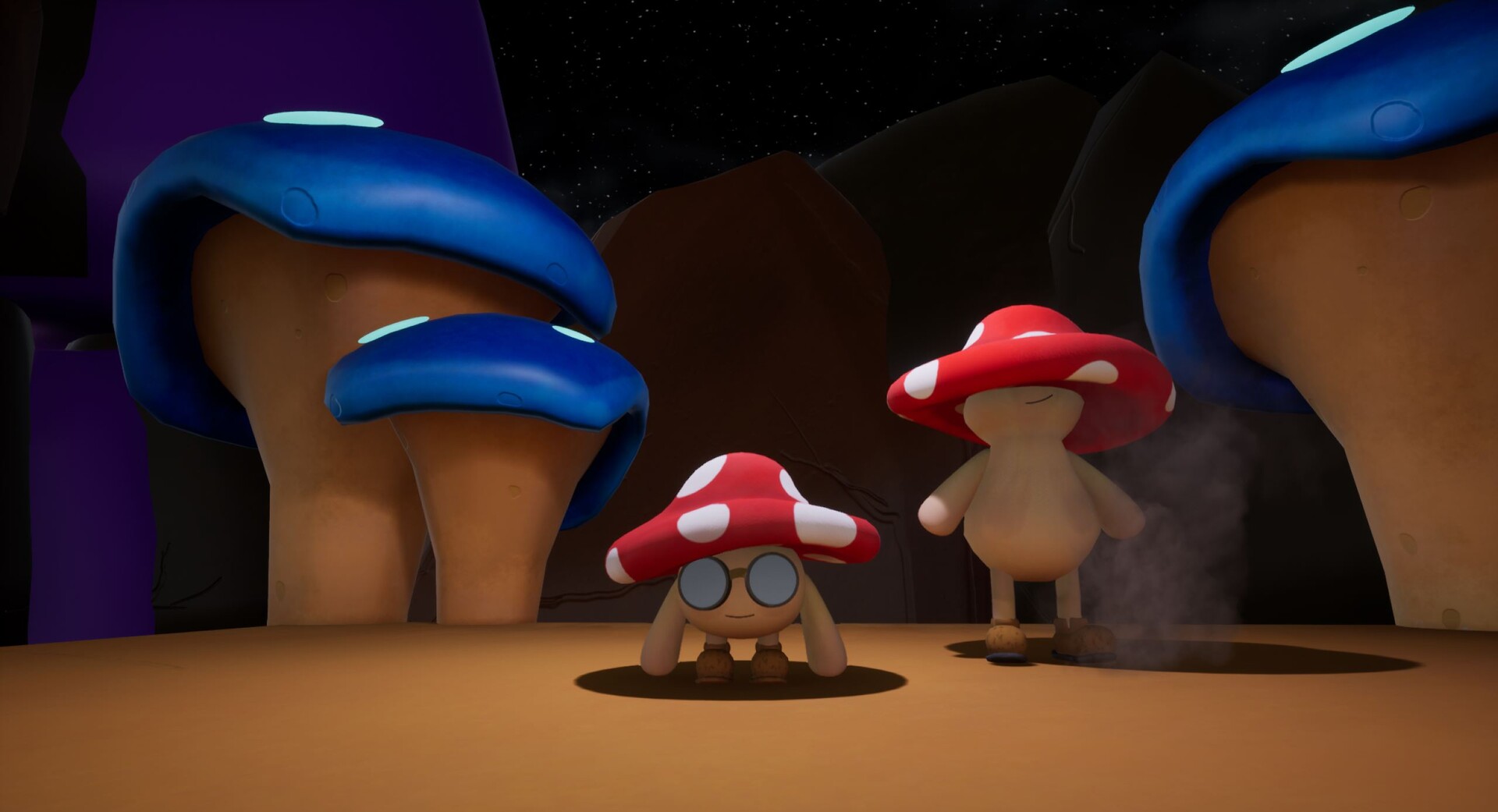
Once characters were animation-ready I brought everything into Unreal Engine — setting up interactivity through Blueprints, building the level logic for puzzles and maze sequences, and assembling the world using Fernando's environment assets. This was the stage where everything converged: characters, environment, movement systems, and game logic all in one scene.
09
NPC Design
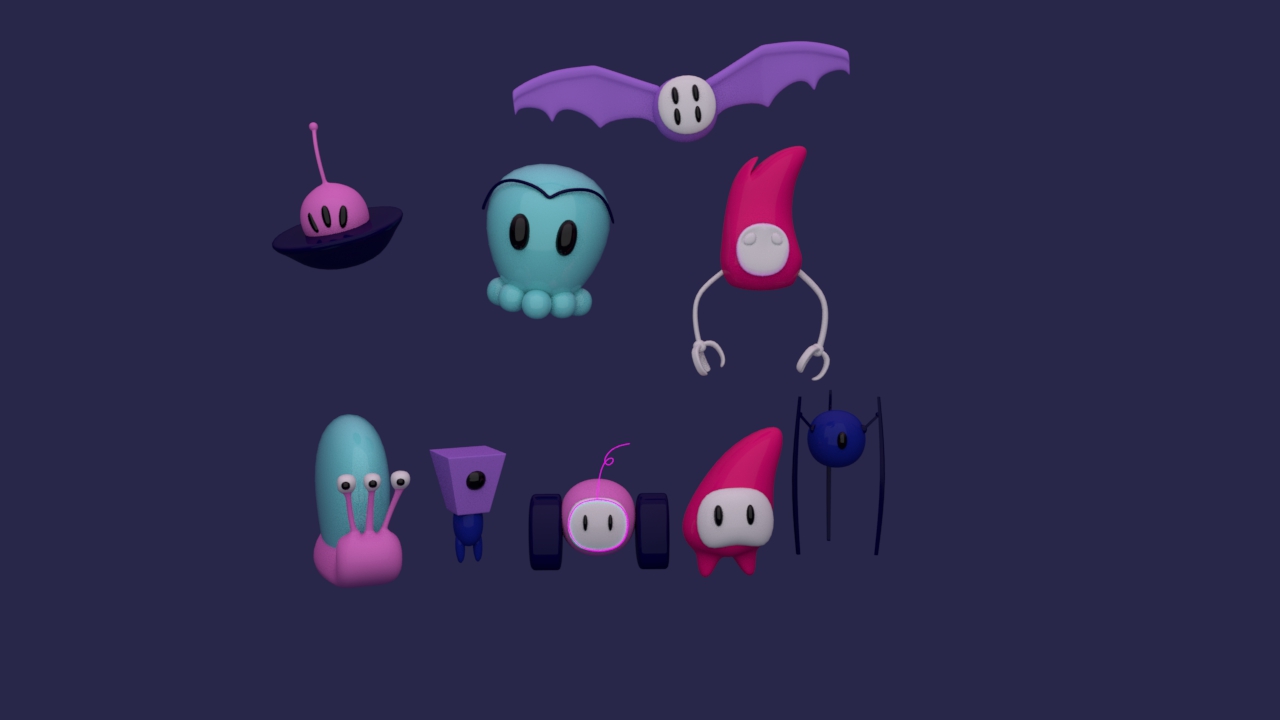
Since the game is designed for younger players, I wanted the underground world to feel welcoming rather than empty or threatening. Research into Nintendo game design shows that friendly characters tend to appear within the first few seconds of gameplay — giving younger players something to interact with and react to immediately.
With that in mind I created a set of simple underground creatures to populate the world. Looking back I would put more thought into their individual designs and personalities — but as a first pass they gave the world the life and warmth it needed.
10
Trailer
The official trailer for Scout's Well — cut to Kyle Feehan's original score.
Official Trailer
11
Gameplay
A full playthrough showing Scout navigating the underground world — platforms, puzzles, mazes, and the journey to find his brother.
Full Gameplay
12